Carovigno Villa:
A masseria both closed and open to the Pugliese landscape
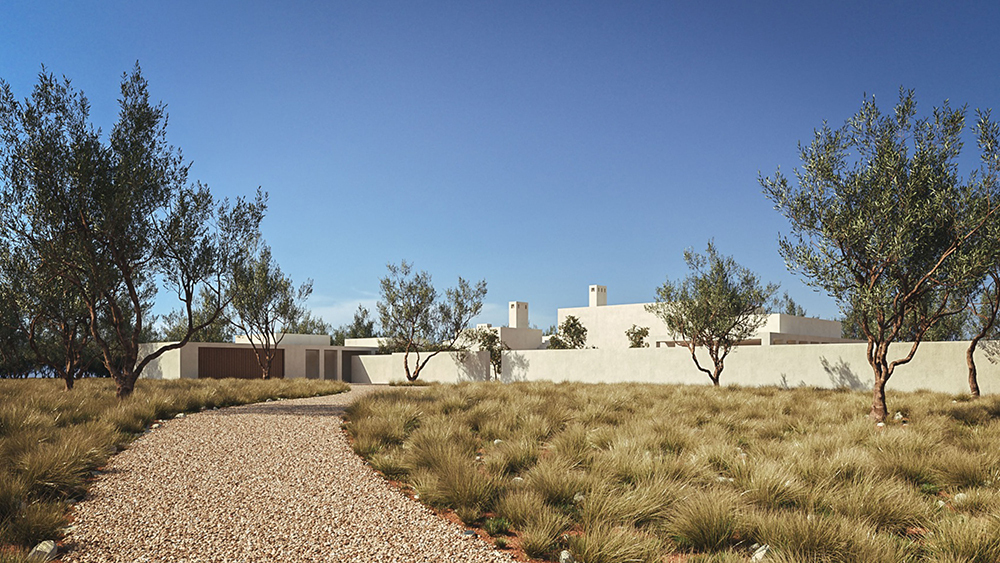
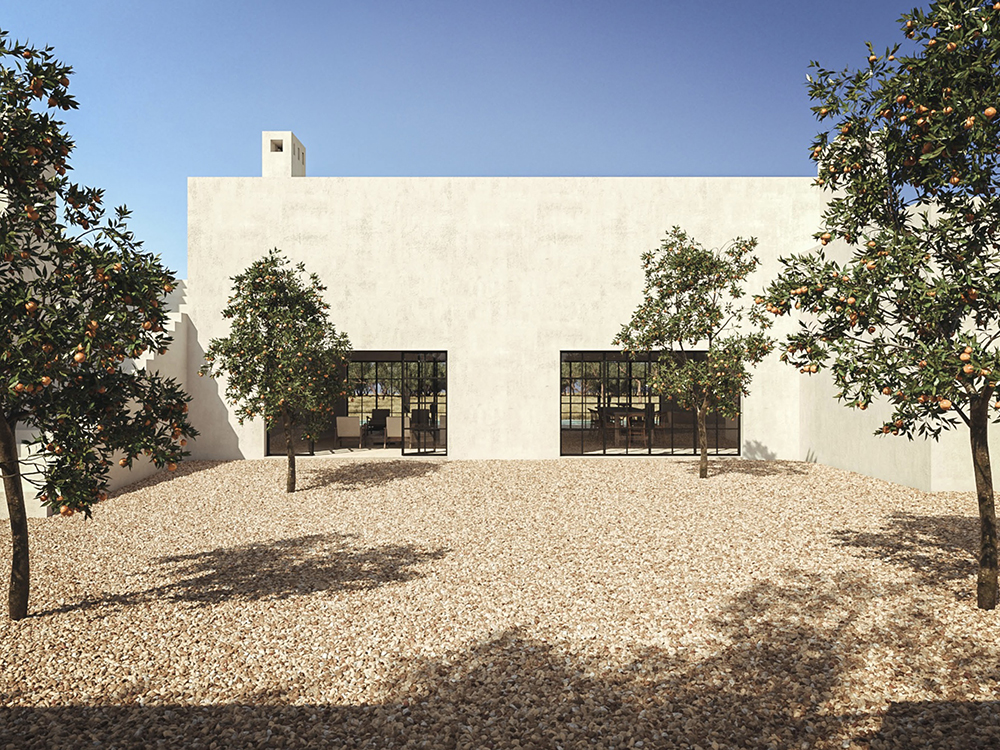
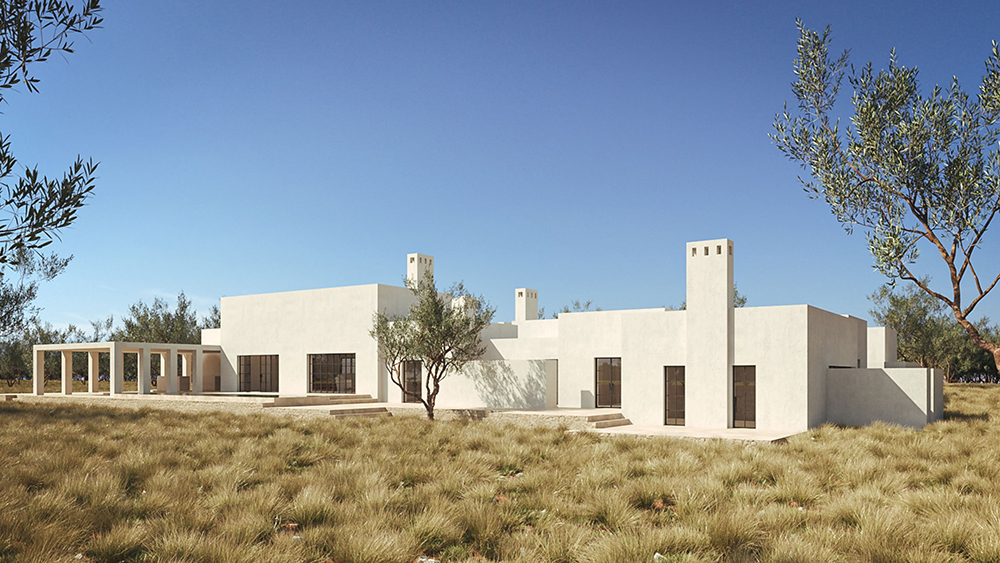
Die Masseria war einst eine Festung, von einem Zaun umgeben, um ihre Besitzer und Tiere vor Diebstahl zu schützen. Hinter dieser Mauer erhob sich schlichte, kaum unterbrechenden Volumen, weil es im Sommer sehr heiß ist, und um den Blick ins Innere zu begrenzen.
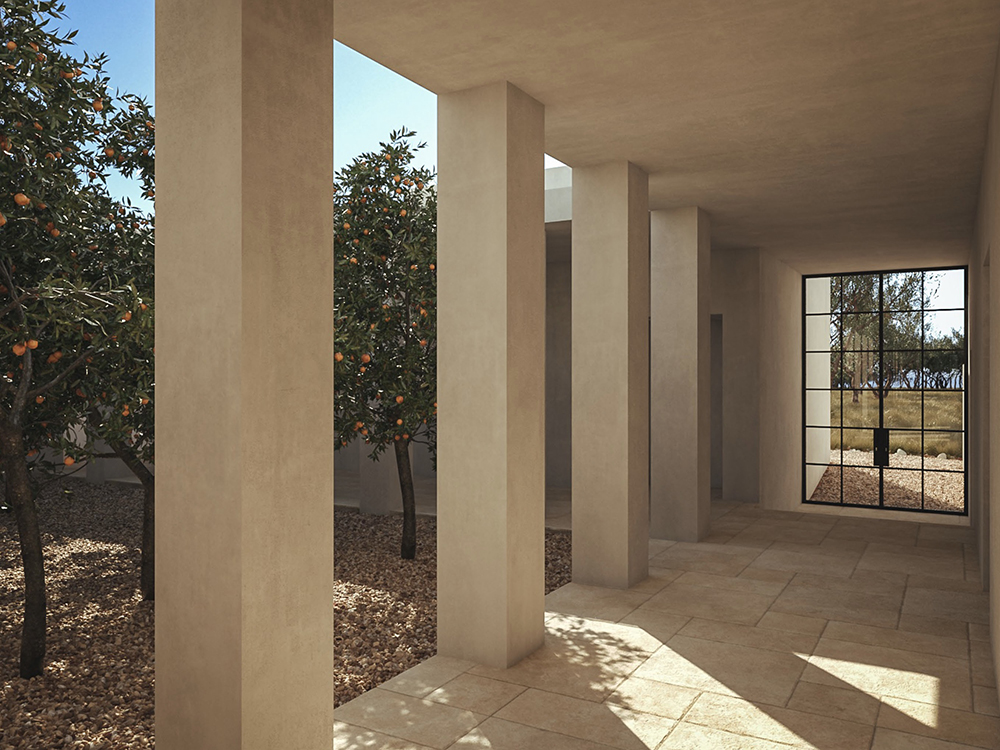
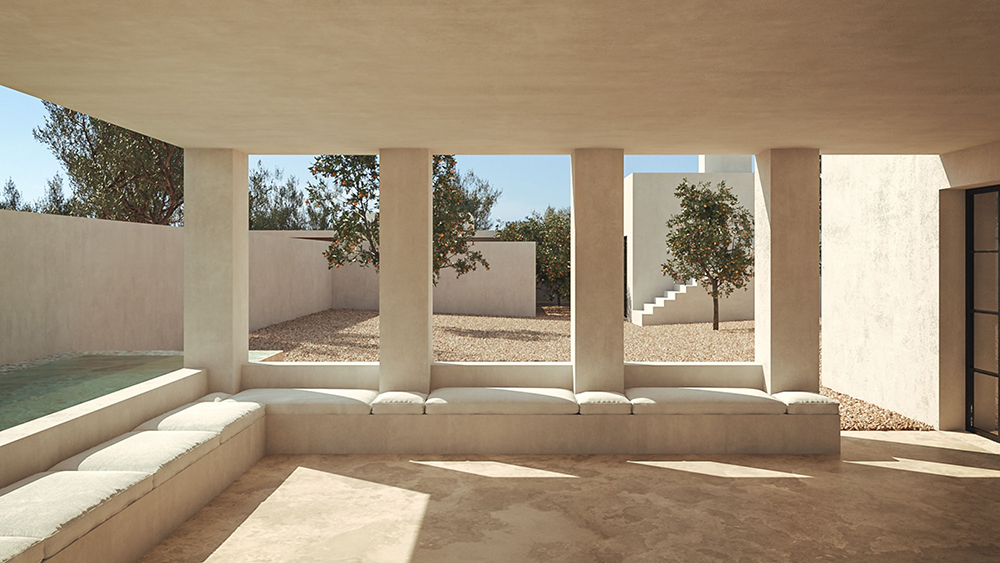
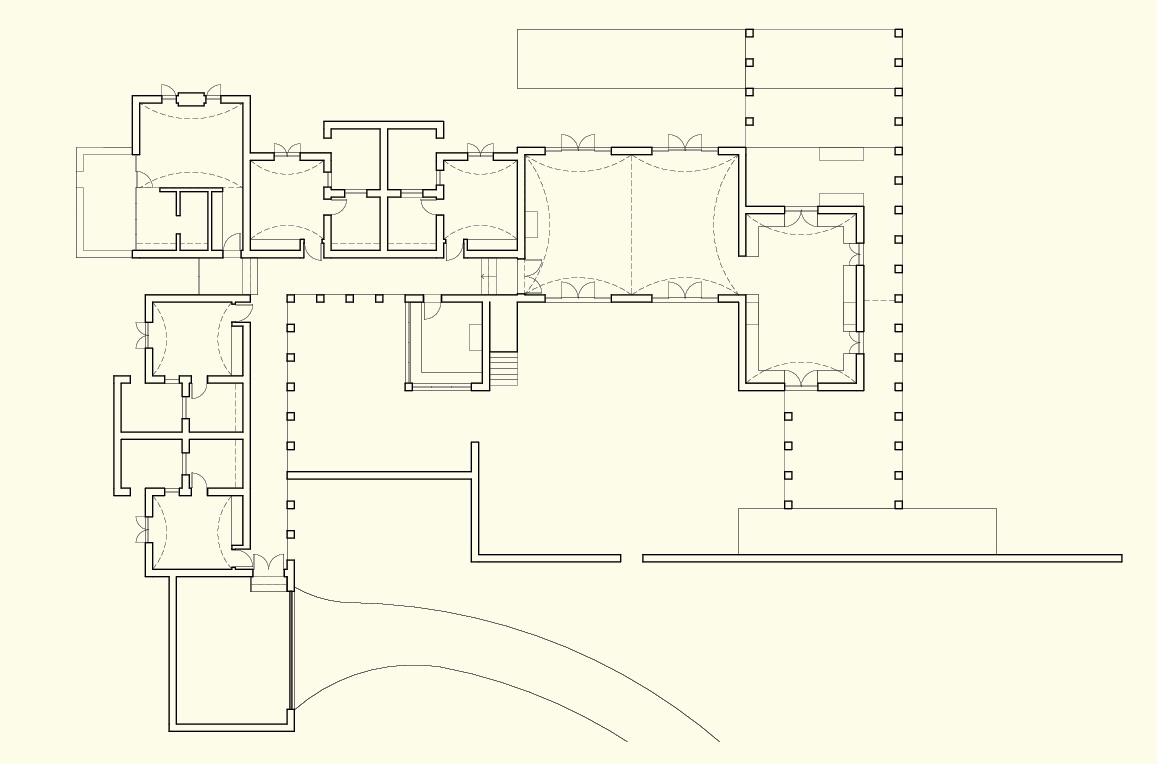
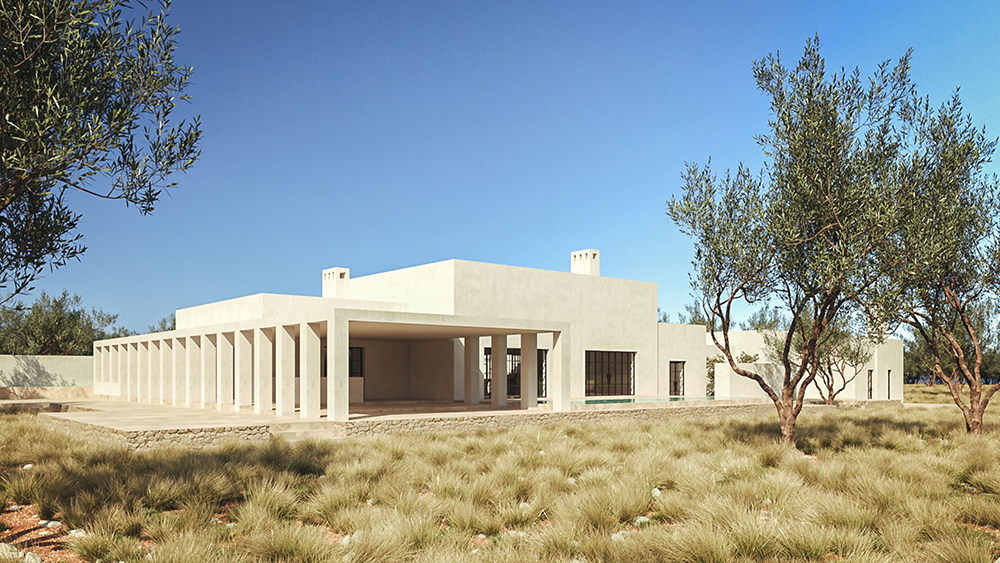
Heute versuchen wir es zu öffnen: hier durch Innenhöfe und Kreuzgänge, die verschiedene Zonen, Nutzungen und Ebenen definieren. Wir erreichen mit den Proportionen eine Hierarchie, die sowohl dem Raum als auch der Komposition des Ganzen dient, denn wir bauen eine weiße Villa inmitten von Olivenhainen: das ist Apulien, sie wollen und träumen davon.
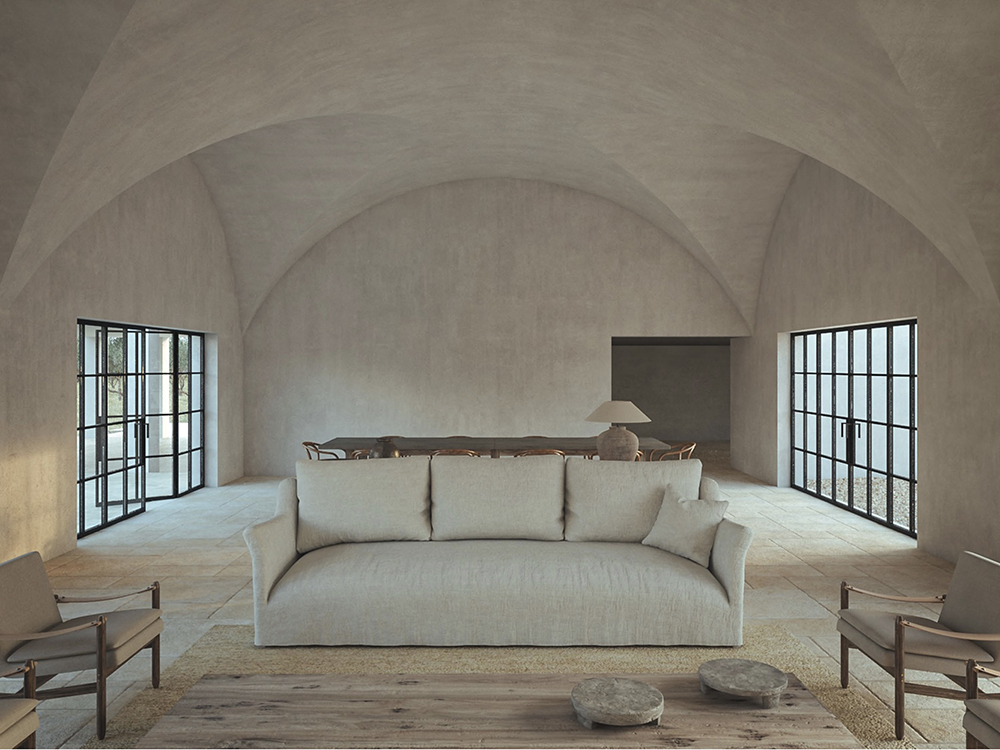
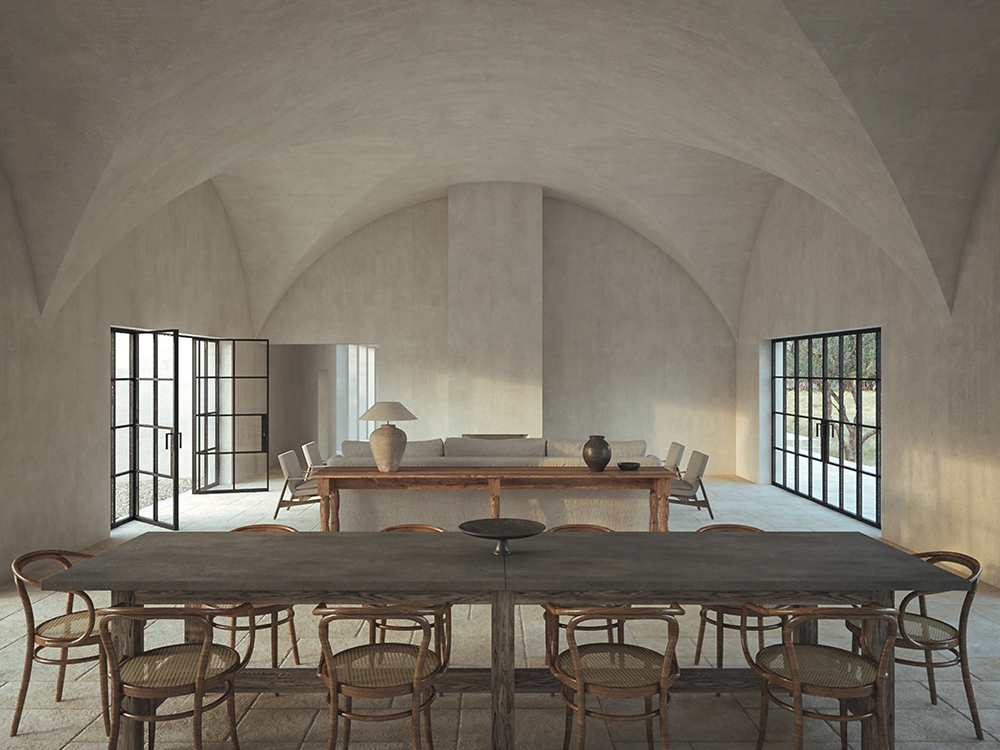
Mit einer Reduktion und Einfachheit zu arbeiten, ist für mich das Spannende: Wenn weiße Volumen und das mediterrane Klima die Konstanten sind, sind Raum, Licht und Ordnung die Variablen.
—
Entwarf in Zusammenarbeit mit Andrew Trotter, Renderings von Riccardo Santambrogio
The traditional Masseria was essentially a fortress, defined by its boundary fence to protect its owners and animals from theft. Simple volumes rose behind this wall, punctuated by small openings both because the summers are extremely hot, and to limit views within.
Today, we seek to open this typology: here through use of courtyard and cloister, defining various zones, uses and levels. We try to achieve hierarchy with both internal and external proportions, to serve both the room and the composition of the whole, because in the end we’re making a white villa amidst Olive groves: it’s Puglia, it’s what they want and dream of.
But to work within such reduction and simplicity is what, to me, is exciting: if white volumes and the Mediterranean climate are the constants; then space, light and order are the variables.
—
Designed in collaboration with Andrew Trotter, renderings by Riccardo Santambrogio